


Random Drug Testing Rates: FMCSA Requirements and Best Practices
Random drug testing is one of the most effective safety tools in the transportation industry. Unlike scheduled tests, random testing creates ongoing accountability and helps prevent substance use before it becomes a risk on the road.
For employers regulated by the FMCSA, understanding random drug testing rates and applying best practices is essential to staying compliant, avoiding penalties, and protecting public safety.
This guide explains what FMCSA requires, how random testing rates work, and how companies can manage their programs correctly.
What Is Random Drug Testing?
Random drug testing is an unannounced testing process where safety-sensitive drivers are selected using a scientifically valid method. Every driver in the random pool must have an equal chance of being selected each time.
Random testing is required for all CDL drivers performing safety-sensitive functions under DOT regulations.
The goal is simple: deterrence, early detection, and safer roads.

These requirements apply to:
Large fleets
Small fleets
Owner-operators
Single-driver companies
There are no exemptions based on company size.
How Random Drug Testing Rates Work
Random testing rates are calculated as a percentage of the average number of drivers in the random pool over a testing period.
For example:
If a company averages 10 drivers in its pool, random testing must cover a specific number of tests to meet the required percentage.
Testing selections are usually spread across multiple periods to maintain unpredictability.
Employers do not choose who gets tested. Selections must be generated using a neutral, random method typically managed by a consortium or C/TPA.
Why Random Testing Is So Important
Random drug testing works because it removes predictability.
Drivers do not know:
When they will be selected
How often they may be tested
Who else is being tested
This uncertainty is what makes random testing such a powerful deterrent.
Studies and enforcement data consistently show that random testing:
Reduces substance use
Identifies violations early
Improves safety performance
Protects companies from liability
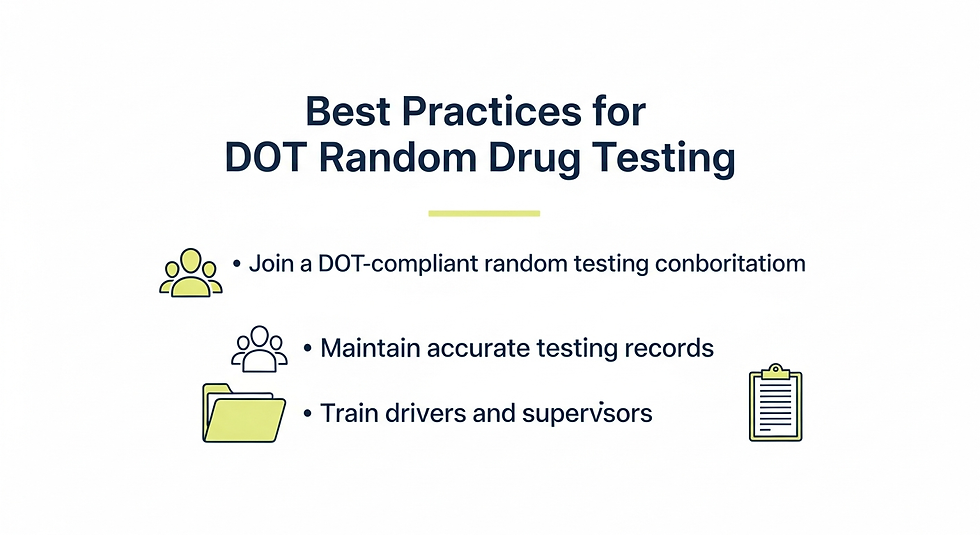
Best Practices for Managing Random Drug Testing
1. Join a DOT-Compliant Random Testing Consortium
For small companies and owner-operators, running an independent random pool is impractical.
A consortium:
Combines drivers into a larger pool
Ensures valid random selections
Meets FMCSA requirements
Reduces administrative workload
This is the most reliable way to stay compliant.
2. Test Immediately After Selection
Once a driver is selected, testing should occur as soon as possible.
Delays increase compliance risk and may be viewed as a program failure during an audit.
Employers should:
Notify drivers promptly
Provide clear instructions
Document the notification process
3. Keep Accurate Records
FMCSA audits focus heavily on documentation.
Employers should maintain records showing:
Driver enrollment in the random pool
Selection reports
Test results
Dates of notification and testing
Annual summaries
Missing paperwork can result in violations even if tests were performed.
4. Don’t Remove Drivers From the Pool
Drivers must remain in the random pool at all times while performing safety-sensitive duties.
Common mistakes include:
Removing drivers temporarily
Forgetting to add new hires
Not updating driver status changes
Any driver performing safety-sensitive work must always be eligible for random selection.
5. Train Supervisors and Drivers
Education prevents confusion and resistance.
Drivers should understand:
Random testing is required
Selection is not personal
Refusal counts as a violation
Supervisors should know how to:
Notify drivers correctly
Handle refusals
Document the process
Common Random Testing Compliance Mistakes
Many employers get cited for avoidable errors, such as:
Missing required testing percentages
Using non-random selection methods
Delaying tests after selection
Poor recordkeeping
Not enrolling all drivers
Failing to use a qualified consortium
These mistakes often lead to:
FMCSA penalties
Safety rating issues
Increased insurance costs
How goMDnow Helps Employers Stay Compliant
goMDnow supports employers by providing:
Scientifically valid random selections
Nationwide testing locations
Fast driver notifications
Complete documentation support
Audit-ready compliance records
This allows companies of any size to meet FMCSA requirements without building complex internal systems.
Final Thoughts
Random drug testing is not just a regulation it’s a safety system.
When managed correctly, it:
Deters drug use
Protects drivers
Reduces risk
Strengthens compliance
Builds trust with regulators and customers
Employers that follow FMCSA requirements and best practices avoid violations and create a safer operation for everyone involved.


Comments